Nourishing Young Minds, Empowering Farmers, Feeding Nigeria’s Future.
The National Home-Grown School Feeding Programme (NHGSFP) provides one hot, nutritious meal per school day to over 10 million pupils in public primary 1-3, sourcing 100% of food produce from local smallholder farmers and employing 100,000+ community cooks.
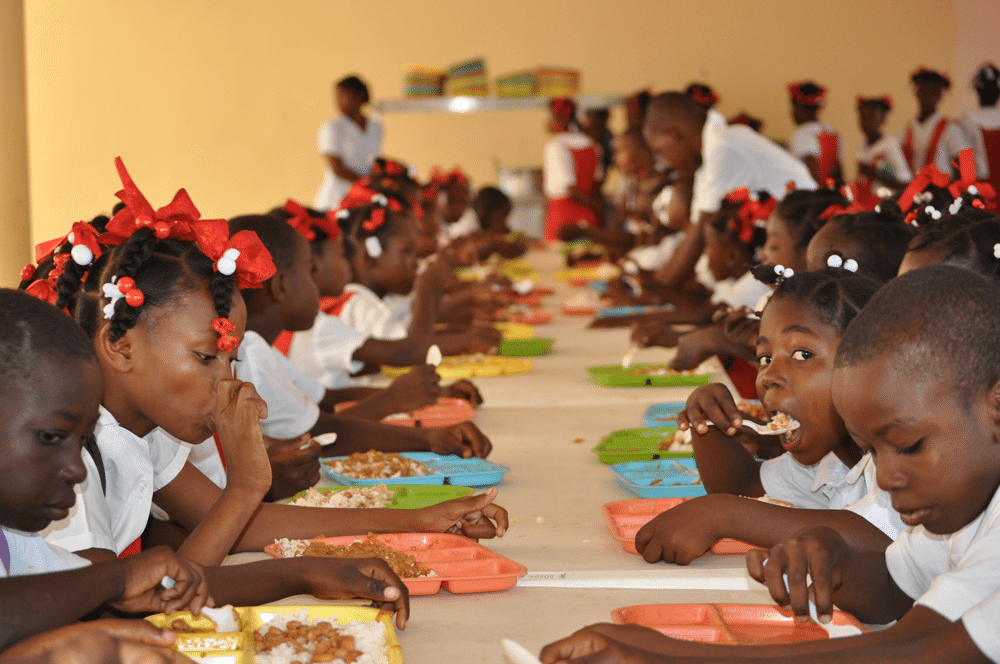
Over 10 Million children fed every school day across all 36 States and the FCT.
A Tripartite Ecosystem of Impact
NHGSFP connects school pupils, rural smallholder farmers, and community cooks into an interdependent cycle of health, enterprise, and educational advancement.
Public Primary School Pupils (Classes 1–3)
Children receive one free, hot, nutritious meal per school day. This eliminates classroom hunger, boosts brain development and focus, reduces stunting and micronutrient deficits, and leads to massive increases in public primary school enrolment and attendance.
Rural Smallholder Farmers
All food items — eggs, chicken, fish, beans, yams, maize, vegetables, and palm oil — are procured directly from smallholder farmers within the immediate state and local communities, creating guaranteed, predictable markets and curbing post-harvest losses.
Community Women & Cooks
Tens of thousands of women from the local host communities are recruited, screened for medical health fitness, trained in modern food handling and sanitation, and remunerated directly by the Federal Government to cook meals for their neighborhood schools.
Sample Weekly Nutritional Standards
Carefully formulated in consultation with pediatric dieticians and customized to indigenous regional agricultural supplies.
Jollof Rice with Hard-Boiled Egg & Vegetables
Rich in energy, complete protein, Vitamin A, and iron.
Beans Porridge with Ripe Plantain & Green Leafy Garnish
High dietary fiber, plant protein, potassium, and minerals.
Yam Porridge with Fresh/Smoked Fish & Palm Oil
Complex carbohydrates, healthy omega fatty acids, and Vitamin E.

Princess (Dr.) Aderemi Adebowale
National Programme Manager, NHGSFP
“Every hot meal served in a public primary school represents a child kept in class, an egg bought from a rural poultry farmer, and a livelihood created for a community mother. We are cultivating the future leaders of Nigeria from the soil of our own nation.”
Frequently Asked Questions
Key questions on school feeding logistics, cook engagement, and farmer aggregation.
Partner with Nigeria’s Largest School Nutrition Network
State Ministries of Education, smallholder farmer cooperatives, and certified community cooks collaborate daily to sustain healthy classroom learning.